Audiences paid to watch Sarah Biffin paint without hands. Royal patrons later paid for the paintings themselves.
Between those two kinds of attention lies the career of a skilled miniaturist who learned to turn public curiosity into a profession, although fame never guaranteed her security.
THE SHORT ANSWER
Sarah Biffin developed ways to sew, write and paint using her mouth and shoulder. Public demonstrations brought her work before potential customers; specialist tuition and influential patrons helped her build an independent artistic career.
She genuinely received royal patronage. The National Trust records appointments as miniaturist to the Prince of Orange in 1821 and Princess Augusta Sophia in 1830. Her success was built on saleable artistic skill as well as an extraordinary public reputation.
WHAT WE KNOW
Biffin was born at East Quantoxhead, Somerset, on 25 October 1784. Her baptismal entry recorded that she had been born without arms or legs. Modern accounts describe her condition as phocomelia.
She learned to use her mouth for intricate tasks and eventually travelled with the showman Emmanuel Dukes, demonstrating painting, writing and needlework to paying spectators.
The dates require care. Wellcome and South West Heritage Trust accounts place her entry into travelling exhibitions in childhood; recent Philip Mould research and the National Trust place it around her twentieth year. The touring career is established; its starting point is less settled.
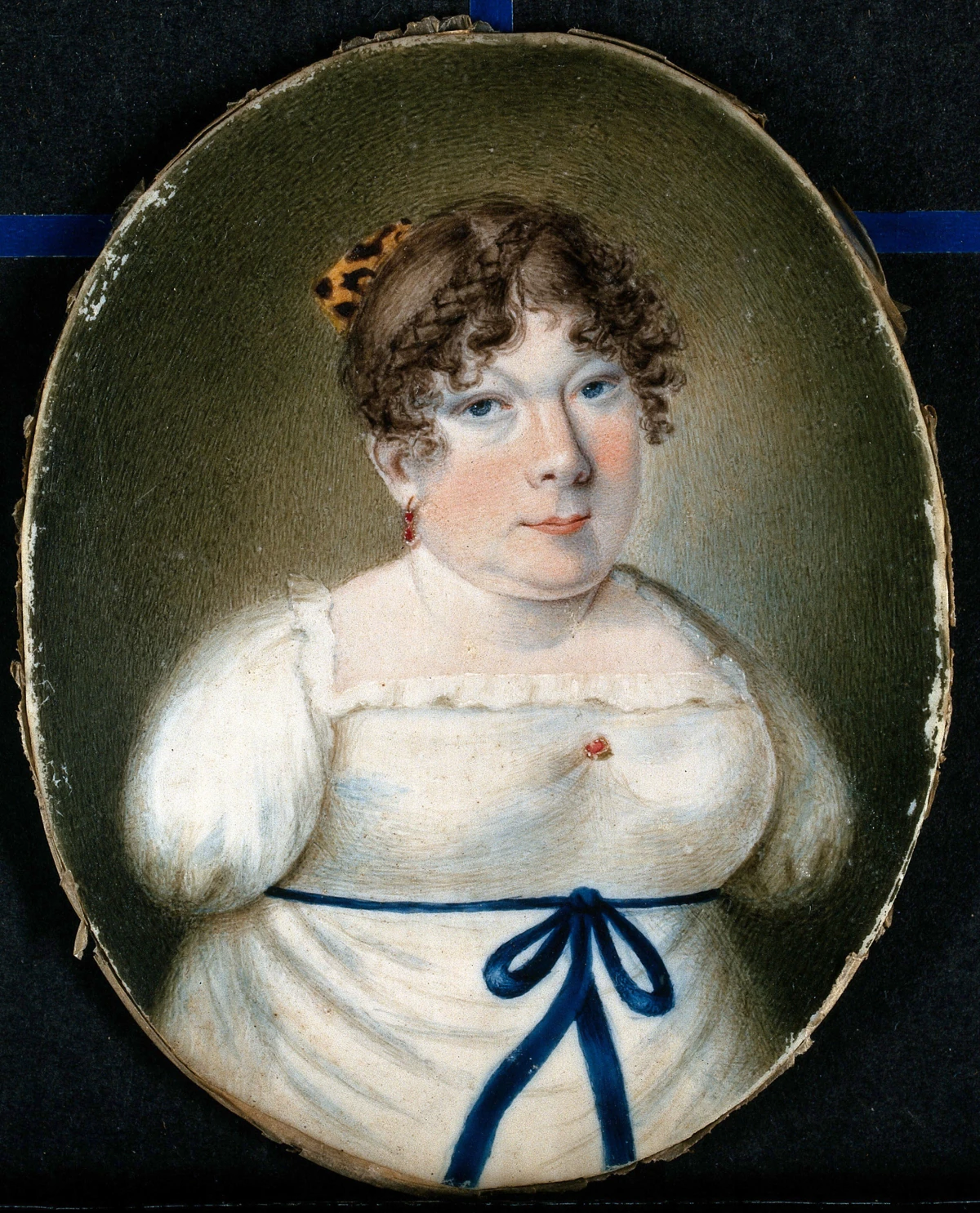
Her surviving work gives firmer ground. Wellcome holds an 1812 self-portrait, painted in watercolour and gouache on ivory. Its catalogue identifies it as a gift to William Stevenson after he lent her miniatures to copy: evidence of an artist learning through close study.
HOW PUBLIC CURIOSITY BECAME A CAREER
Performing before a crowd and painting a convincing miniature demanded different skills. Biffin developed both.
The Earl of Morton became an important supporter, helping her obtain tuition from the miniature painter William Marshall Craig. She established herself professionally and secured commissions from wealthy clients.
By 1821 her achievements included exhibiting at the Royal Academy and receiving a silver medal from the Society of Arts. She also taught, offering instruction in miniature painting and lithography. These were the activities of a working professional, not simply a performer repeating a novelty act.
THE STORY EVERYONE TELLS
The familiar version moves briskly from fairground attraction to royal favourite, with an aristocratic benefactor providing the turning point.
Morton’s support mattered. But that neat ascent leaves little room for Biffin’s own practice, commercial judgement and continued work. Nor did recognition end the prejudice surrounding her: contemporary references could treat her body as a joke while overlooking her pictures.
WHAT THE EVIDENCE ACTUALLY SAYS
The central story is WELL SUPPORTED. Claims about particular royal relationships still need precision. Receiving a commission, painting a royal likeness and holding an appointment were different things; a portrait alone does not prove that its subject sat before her.
Biffin also used the married name Mrs Wright. Looking only for paintings signed Biffin therefore misses part of her professional identity.
Her self-portraits offer another kind of evidence. In the portrait of about 1842 acquired by the South West Heritage Trust, she presents herself in fashionable dress, with a paintbrush pinned to her shawl. The image places her working equipment within a carefully composed professional identity.
WHY HER STORY RETURNED
Biffin’s later years brought financial difficulty and failing eyesight. Friends in Liverpool raised funds for an annuity. She continued working and died on 2 October 1850, shortly before her sixty-sixth birthday.
Renewed attention has brought her pictures back into view. In 2019 a self-portrait sold for £137,500 including premium, against an estimate of £1,200–£1,800. Exhibitions at Philip Mould in 2022 and the Holburne Museum in 2023–24 helped introduce her work to new audiences.
Her biography explains why people first stopped to watch. Her paintings explain why they should keep looking.
RELATED CURIOSITIES
Why Did a Mysterious Woman's Photograph Survive 150 Years Beneath the Sea?
Why Did a Victorian Man Cover an Entire Room with 44,068 Postage Stamps?
Why Do We Say “Mad as a Hatter”?
SOURCES & FURTHER READING
1. Philip Mould & Company — Sarah Biffin: biography and archival references.
https://philipmould.com/artists/233-sarah-biffin/
2. South West Heritage Trust — Sarah Biffin: digital exhibition.
https://swheritage.org.uk/digital-exhibitions/sarah-biffin/
3. Wellcome Collection — Sarah Biffin. Watercolour by Sarah Biffin, 1812.
https://wellcomecollection.org/works/kusekcbm
4. National Trust Collections — The Marchioness of Abercorn at the Cottage of Industry, NT 461462.
https://www.nationaltrustcollections.org.uk/object/461462
5. South West Heritage Trust — Sarah Biffin Self-Portrait Acquired, 13 December 2023.
https://swheritage.org.uk/news/sarah-biffin-self-portrait-acquired/
6. Philip Mould & Company — Who Was Sarah Biffin? Commentary by Emma Rutherford.
7. The Holburne Museum — Sarah Biffin, exhibition 29 September 2023–14 January 2024.