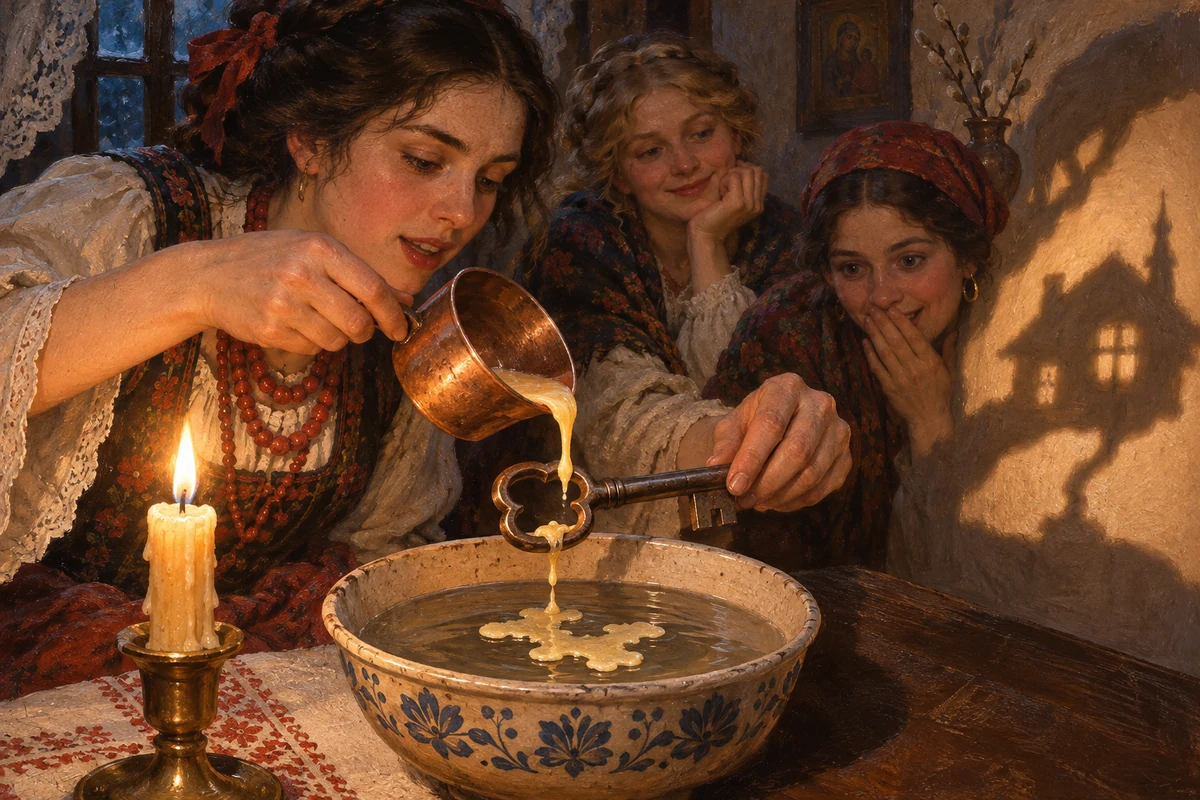
On the last night before St Andrew’s Day, a key in a Polish household can have an unusual job. Melted wax passes through the hole in its handle and lands in cold water. What matters next is the shadow.
The short answer
The Polish custom of Andrzejki takes place on the evening of 29 November, the eve of St Andrew’s Day. In its best-known fortune-telling game, melted wax is poured through the bow of an old key into cold water. Once it hardens, the shape is held up to a light. People read the outline it casts on the wall for clues about the future. Historically, one of the main questions was who an unmarried woman might marry. Compare this with the Halloween custom of consulting three bowls and fortune-telling tokens in Irish Halloween cakes.
The shape on the wall
The Polish History Museum describes how the shadow could be interpreted as a clue to a future husband’s occupation. A shape that looked like a windmill, for example, could suggest a miller. There was room for imagination at every turn. The lump of wax might look unpromising on the table, yet rotating it in front of the light could produce a recognisable figure. Another angle on All Hallows, mischief and the spirits of the dead comes from Halloween mirror divination.
The key is the most memorable part of the equipment. It also raises the hardest historical question. An old key invites a neat explanation about unlocking the future, but the records of the practice establish how people used it more securely than they explain why it was chosen.
A race between shoes
Wax was one among several ways of asking about marriage. In another game, participants lined up their shoes and moved them along towards the door. The first shoe to reach the threshold was supposed to belong to the first person who would marry. Where the wax depended on seeing a likeness, the shoes turned the prediction into a race everyone could watch.
Older accounts associate St Andrew’s Eve especially with unmarried women. Some traditions set aside St Catherine’s Eve, on 24 November, for unmarried men to ask similar questions. The distinction helps recover the original stakes. A game that now works for children or mixed groups once addressed a decision that could shape a person’s household, work and standing in the community.
What the evidence actually says
The seasonal date and the fortune-telling practices are well documented. A claim that this exact combination of wax, key and water survived unchanged from pre-Christian times would need earlier evidence than the accounts of the custom provide. The calendar gives us a clear setting. The first occasion on which someone put a key over a bowl remains out of reach.
The custom survives as a social game. It still depends on the moment when one person sees a windmill and everyone else leans closer to find out why.
Related curiosities
Why Did People Stare Into Mirrors at Midnight on Halloween?
Why Were Three Bowls Used for Halloween Fortune-Telling?