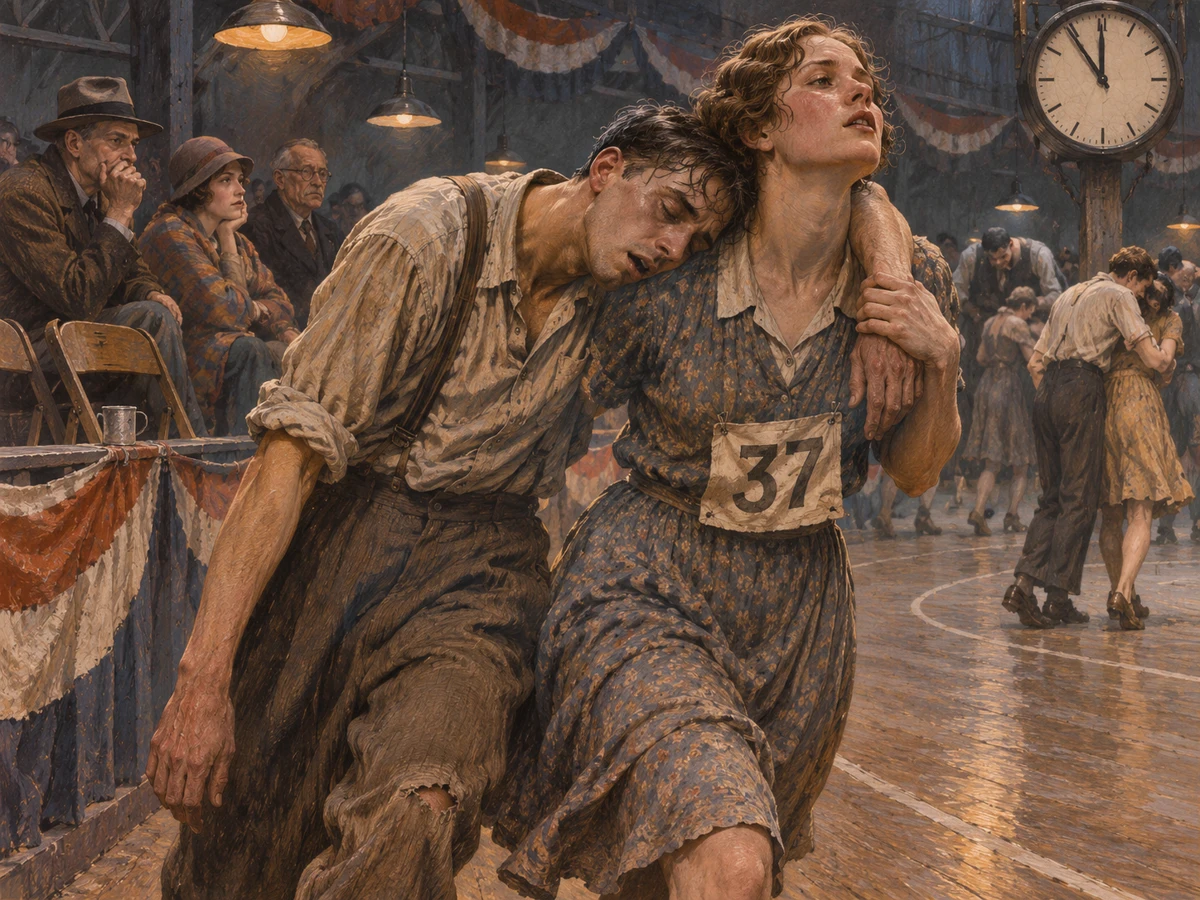
In a Seattle newspaper photograph from August 1928, Vonnie Stotko appears to be asleep against Arnold Ehling. He is doing enough dancing for both of them. Staying upright kept a couple in the contest, and by the Depression, staying in could mean another meal, a place to sleep and a dwindling chance at the prize.
Before the Depression, there was a record to beat
In 1923 Alma Cummings, a dance instructor, went twenty-seven hours at New York’s Audubon Ballroom. It took six successive partners to keep up with her. It was an irresistible sort of record for a newspaper: a number yesterday’s local champion might exceed by tomorrow morning. Challengers soon did. All this happened years before the Wall Street crash.
The publicity quickly acquired an alarming counterpart. Guinness World Records recounts the death of Homer Morehouse after a reported eighty-seven hours of dancing in April 1923. The precision belongs to the account handed down. It tells us little about rest, medical supervision or what anyone had counted as a completed hour.
The camera caught another side of the craze that May. A National Photo Company photograph shows two Baltimore couples at the marriage licence bureau in Washington, DC. The agency’s album says they had shuffled there in their sixty-sixth hour and intended to marry that night. We can see the clerk. We have the agency’s account of the hour. A photograph at the licence counter cannot tell us what either couple promised afterwards. See the original photograph and caption.
What counted as dancing?
Watch the knees. At some marathons a knee touching the floor put a contestant out, while a person who leaned heavily on a partner could stay in. One familiar arrangement allowed forty-five minutes on the floor followed by fifteen off it. Other shows set their own rules. A total measured in weeks included the short intervals permitted by that particular management.
The resulting steps bore little resemblance to anyone’s idea of a night out. Partners learned to take turns carrying each other’s weight. A dancer could read while shuffling. Some promoters called the event a walkathon, a name that offered a fair description of much of the afternoon. A spectator arriving in the evening might see something quite different. Races round the floor and elimination sprints forced the pace. A prolonged stretch without the customary break could reduce the field just as effectively.
The price of one more meal
A contestant could lose the prize and still have had a reason to enter. Meals and accommodation had a value from the first day. Prize money, sometimes hundreds of dollars, belonged to a future in which the entrant had to outlast people who did this for a living. Take Seattle in 1928. Guinness records a $1,000 first prize and $50 for the couple who placed fifth. By the end of that contest the show had run nineteen days.
The disparity mattered. Professional entrants knew how to rest on a partner and when to conserve their strength. Promoters needed performers who could entertain through a slack evening. An aspiring local couple could find themselves competing with experienced hands who also helped put on the show. A seat in the audience, by contrast, could cost a quarter, and the customer could go home whenever they pleased.
Historian Carol Martin estimated that the business employed some 20,000 people. That figure includes the people around the floor: judges, trainers, nurses and masters of ceremonies, as well as contestants. Weddings, public courtships and sudden tests of stamina gave spectators a reason to buy another ticket. The spectacle required planning. The tiredness took care of itself.
When the city stopped the clock
Seattle prohibited dance marathons within city limits in September 1928. Washington State legislated against dance endurance contests in 1937. Those two dates, nine years apart, give a better sense of how the business ended than the suggestion that America suddenly outlawed it. A promoter only needed another town willing to host the floor.
In Minneapolis, Callum DeVillier’s grave marker still credits him with 3,780 continuous hours. It preserves a champion’s claim in stone. The rules about rest matter quite as much here as they did when the clock was running. See the inscription.
Horace McCoy turned the contest into his 1935 novel They Shoot Horses, Don’t They? Sydney Pollack’s film followed in 1969. Its elimination races can colour how we see surviving photographs, just as television shaped the memory of the 1960s zombie dance. One detail needs no help from a film director. Look back at the Seattle photograph. For the sleeping contestant, the difference between staying in and being sent home was the person standing beside her.
The marathon promoter shared a theatre manager’s fear of a show that flopped and a showman’s appetite for the effects behind stealing somebody’s thunder.
Related curiosities
- Why Did People Dance Like Zombies in the 1960s?
- Why Is a Flop Called a “Turkey”?
- Why Do We Say “Steal Someone’s Thunder”?
Sources & further reading
- HistoryLink, Dance Marathons of the 1920s and 1930s, with contemporary photographs and trade reports
- Library of Congress, Marathon Dancers, 10 May 1923
- Guinness World Records, the Cummings and Morehouse accounts and Seattle prize figures
- Seattle Municipal Archives, 2012 collection of archival finds, Dance marathons
- Carol Martin, Dance Marathons, book description
- American Film Institute, They Shoot Horses, Don’t They?
Last Checked: 27 November 2026