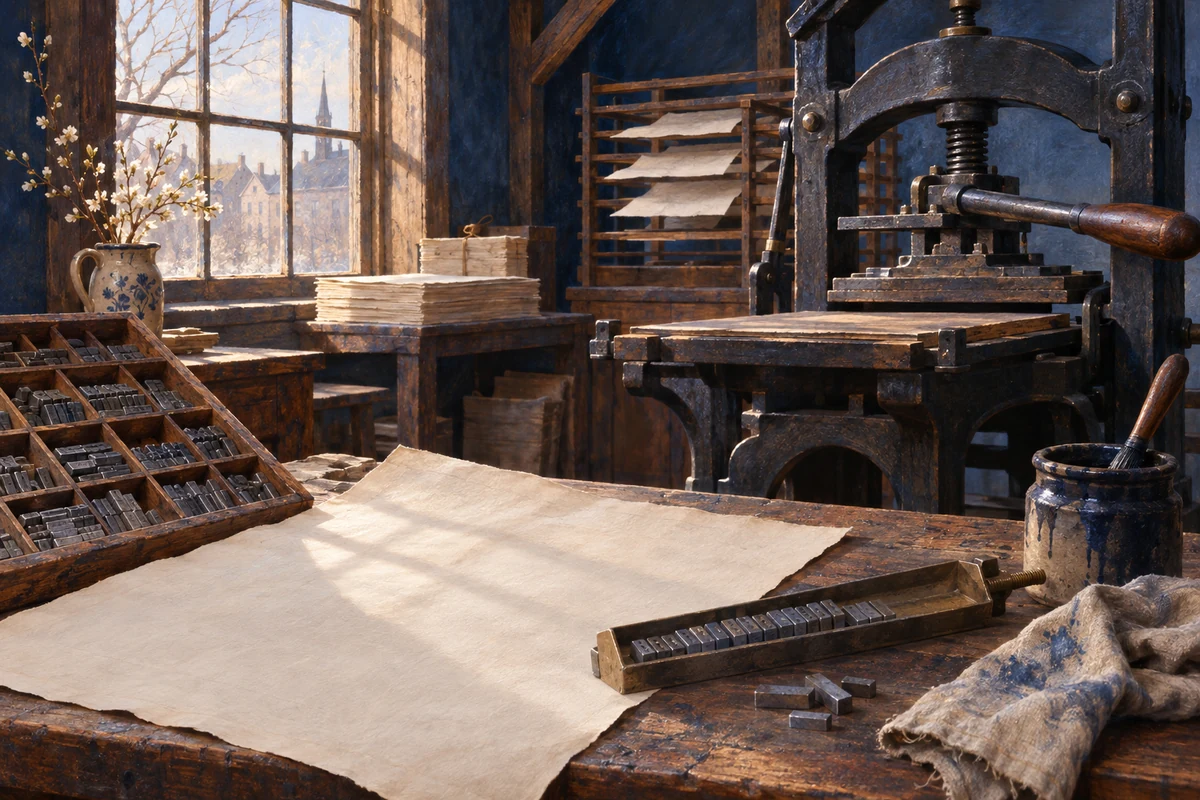
The first issue of The Provincial Freeman went to press in March 1853. It named two men as editors. The woman who drove the venture would spend the next year raising the money to print it again.
The short answer
Mary Ann Shadd, later Mary Ann Shadd Cary, founded an abolitionist newspaper in Canada West with help from Samuel Ringgold Ward and Alexander McArthur. The first issue identified the two men as editors. The Dictionary of Canadian Biography says Ward lent his name to build interest and subscriptions. Shadd remained the driving force, while a public role for a woman editor carried commercial risks of its own. Another angle on books, reading and childhood comes from Sarah Josepha Hale’s Thanksgiving campaign.
From the classroom to the printing press
Shadd was born free in Delaware in 1823 and taught in the United States before moving to Canada West in 1851, the year after the Fugitive Slave Act increased the danger for people escaping slavery. She opened a racially integrated school in what is now Windsor, Ontario. In 1852 she published A Plea for Emigration, making the case for Black Americans to settle in Canada West and giving prospective migrants practical information about what they might find there.
Shadd shared the abolitionist Henry Bibb’s belief that Canada could offer refuge. They disagreed over how newcomers should build their lives there. Bibb supported separate Black settlements as a way to organise land, assistance and community. Shadd argued for integration and opposed separate schooling. Bibb already had a newspaper, Voice of the Fugitive, through which he could make his case. With The Provincial Freeman, Shadd gained a paper through which to make hers.
What the first issue tells us
The first issue appeared on 24 March 1853 in the Windsor area. It was a trial issue, intended to attract the backing that would make a weekly paper possible. The University of Windsor’s newspaper archive identifies both Ward and McArthur as the named editors. Ward was already a public figure in the abolitionist movement. His association gave readers a name they knew when deciding whether to subscribe to something they had never seen before.
A year passed before regular publication began. During the gap Shadd lectured in Canada and the United States to raise support. The paper resumed in Toronto in March 1854 and later moved to Chatham. The effort required to get a second issue into print is as revealing as the names on the first. A newspaper needed readers willing to pay for the next copy before anyone could count on there being one. Compare this with Irena Sendler’s effort to preserve children’s names.
What the evidence actually says
The founding story is well supported. The opening issue establishes who held the printed editorial titles, while historical accounts establish Shadd’s leadership. They also describe her using initials and the title of publishing agent early in the paper’s run. The University of Windsor’s account links the later appointment of William P. Newman as editor to concern over the economic effect of prejudice against a woman running the paper. Related examples can be found in Josephine Cochrane’s dishwasher patent.
It is tempting to read the first masthead as evidence of one decisive motive. The records give a fuller picture. Shadd had to raise money, find allies and gain readers for an abolitionist weekly, all in a trade in which a woman’s authority could be questioned. Ward’s established name had a practical value. The paper’s history shows how many decisions about whose name appeared in print were also decisions about whether there would be a newspaper at all.
Why her story matters
Through The Provincial Freeman, Shadd argued over questions that mattered to the people making new lives in Canada West, including schooling, settlement and the treatment of refugees. The surviving issues let readers encounter those arguments where they first appeared, among the ordinary business of a weekly paper. A masthead tells us who the paper formally put forward. Read past it and a different part of the story comes into view: the teacher who turned a trial issue into a place where a community could argue about its own future.
Related curiosities
Why Did Doris Lessing Pretend to Be a First-Time Novelist?
Why Was the Young Chemist Behind a Leprosy Treatment Almost Forgotten?
How Did an Enslaved Man Sail a Confederate Ship to Freedom?
Sources & further reading
- Canadian Typography Archive, front page of The Provincial Freeman, 24 March 1853
- University of Windsor newspaper archive, The Provincial Freeman
- Dictionary of Canadian Biography, Mary Ann Camberton Shadd Cary
- Parks Canada, Mary Ann Shadd National Historic Person
- National Endowment for the Humanities, A Voice for Freedom
- University of Waterloo, Ontario newspaper guide and digitised holdings